What temperature do cats find comfortable?
Cats are generally comfortable at higher ambient temperatures than people. This does not mean that you need to turn the thermostat up very high especially for your cat. A cat that can move freely around the home will usually find a place that feels comfortable at that moment.
The most important thing is therefore that your cat can choose between warmer and cooler places. For example, do not place a cat bed so close to a heat source that your cat has nowhere to go when it becomes too warm.
For kittens, senior cats, hairless cats and cats that are ill or very thin, a warm resting place may be particularly important. If your cat is ill, however, you should follow your vet’s advice.
Cats and radiators: what should you look out for?
A radiator is irresistible to many cats. A wide radiator or windowsill above it can quickly become a favourite sleeping spot. With standard central heating, this is often not a problem, provided that the cat is not lying directly against a very hot surface.
Check how warm the radiator actually becomes. If a surface feels uncomfortably hot, direct and prolonged contact is not advisable for your cat either. Electric heaters, convector heaters and other appliances that can become very hot require particular attention. Besides the risk of overheating or burns, cables and appliances that can topple over may also pose a danger.
Make sure your cat can easily leave the warm spot. A cat must not become trapped or stuck between a radiator, wall or piece of furniture.
Is a radiator hammock safe for cats?
A radiator hammock can be a comfortable option for cats that like sleeping close to the heating. The cat can then lie comfortably above or in front of the radiator without constantly being in direct contact with the warm surface.
Make sure the hammock is securely attached and suitable for your cat’s weight and the type of radiator. Check regularly that the attachment is still secure. Also consider the temperature of the radiator and the manufacturer’s instructions for both the hammock and the heating system.
Accessibility is also important for an older cat or a cat with joint problems. A warm hammock offers little benefit if the cat can only get in and out with a difficult or painful jump.
Warm sleeping spots for cats
A warm sleeping spot does not have to be directly beside the heating. A soft bed in a draught-free place may be sufficient. A bed with a thick base or raised sides can be particularly comfortable, as your cat can curl up inside it.
For example, view our baskets and cushions for cats.
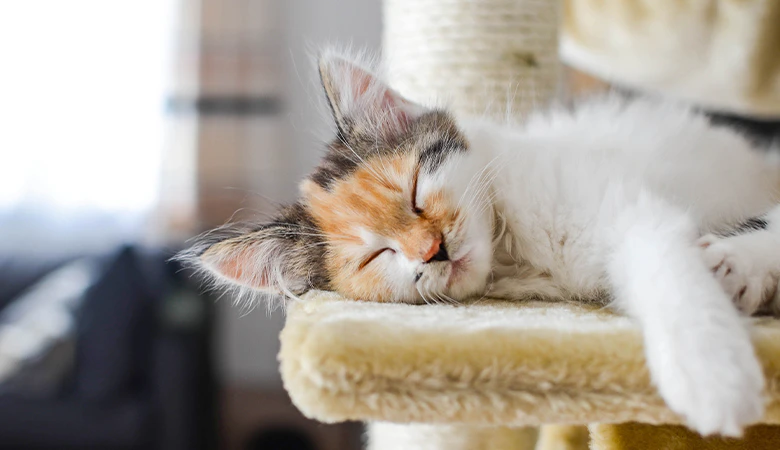
Height is also important to many cats. A sleeping spot on a cupboard, shelf or cat tree often feels safe because the cat has a good view of its surroundings. It may also be slightly warmer higher up in a room. Scratching posts, shelves and cat furniture allow you to offer several elevated resting places.
How do you create a safe, warm sleeping spot?
Choose a quiet, draught-free place where your cat will not be disturbed constantly. Make sure the sleeping spot is stable and that your cat can get in and out independently.
If you use a heated cat bed or heat pad, choose a product specifically designed for pets and follow the instructions for use. A regular electric blanket, hot-water bottle or other powerful heating element can become too hot and cause burns. Extra caution is needed with cats that are less able to respond to heat because of old age, illness or neurological problems.
Your cat must also always be able to move away from the heat source. Therefore, provide a cooler resting place alongside the warm sleeping spot.
How can you tell whether a cat is cold?
A cat that is cold may curl up very tightly and tuck its paws and nose under its body as much as possible. Some cats seek out warm places unusually often or crawl under blankets. If it is genuinely cold, a cat may also start shivering.
Cold ears or paws alone do not reliably indicate whether your cat’s body temperature is too low. Pay particular attention to its overall behaviour. If your cat becomes lethargic, is less responsive, feels unusually cold or continues to shiver for a prolonged period, there may be more going on. Contact a vet in that case.
Which cats are more likely to need extra warmth?
Kittens in particular are less able to regulate their body temperature. Older cats, thin cats and cats with little or no fur may also need a warm environment more quickly. A senior cat with osteoarthritis may also find a warm, soft resting place comfortable.
If you notice that a cat which normally never lies near the heating suddenly seeks warmth constantly, look for other changes too. Weight loss, eating less, lethargy or other unusual behaviour are reasons to have the cat examined.
Let your cat choose its favourite spot
The ideal sleeping spot differs from one cat to another. One cat may prefer lying in a radiator hammock, while another chooses a soft cushion or a high spot on the cat tree. By providing several safe resting places, you allow your cat to choose where it feels comfortable at that moment.
The warmth should above all be comfortable rather than extreme. Provide a stable, draught-free sleeping spot, prevent direct contact with very hot heat sources and always give your cat the option of moving to a cooler place. This allows your cat to safely seek out its favourite warm spot during cold autumn and winter days.
Do you have any questions? Please contact us at veterinarian@vetsend.co.uk.