Exercising safely on wet or slippery ground
Rain, mud and wet leaves can make the ground very slippery. Always adapt your training to the conditions:
- Avoid sharp turns, sudden changes of pace and high speeds on slippery ground.
- Choose a steady pace and a surface that provides your horse with sufficient grip.
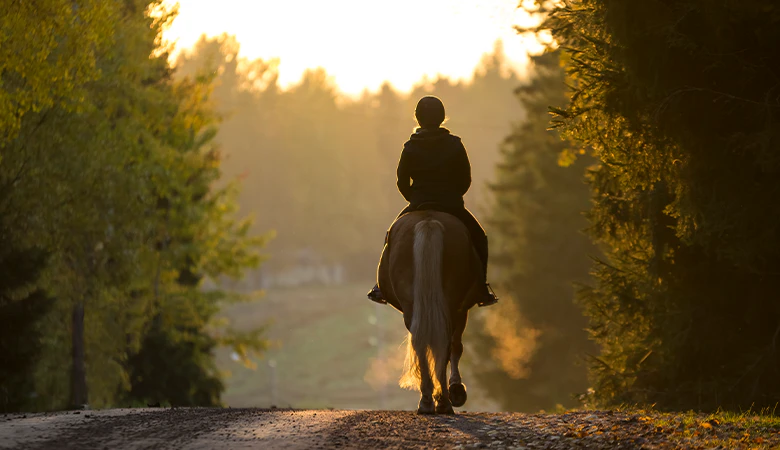
Planning to go hacking? Pay particular attention to wet leaves, muddy verges and slippery sections of road. Good hoof care is also important during this season. Would you like to learn more about caring for your horse’s hooves and coat during autumn? Read our blog about autumn coat and hoof care for horses.
Rain is not the only thing that can make hacking more challenging. Wind can also create additional difficulties. Moving branches, blowing leaves and unexpected noises may cause your horse to become more alert or distracted. Keep this in mind when choosing your route and adjust your pace to the weather conditions.
Make sure you and your horse are clearly visible
With shorter days, you are more likely to be out riding at dusk or in the dark. Visibility can also be reduced during the day by rain, fog or heavy cloud cover. Make sure that both you and your horse are clearly visible to other road users.
You can improve visibility by using:
- A reflective or fluorescent jacket or high-visibility vest for the rider
- A reflective exercise sheet
- Reflective leg boots or bands. The movement of your horse’s legs makes these particularly noticeable
- A reflective breastplate
- Reflective bands attached to the bridle or tail
- Suitable lighting when riding on public roads in the dark or in poor visibility
Ideally, combine different types of high-visibility equipment. This makes it easier for other road users to recognise both you and the outline and movements of your horse.
What does the law require?
Are you planning to ride your horse on public roads in the United Kingdom? The Highway Code advises riders to wear fluorescent clothing in daylight and reflective clothing when riding in poor visibility. If you need to ride at night, you should wear reflective clothing and use appropriate lights.
In England, Scotland and Wales, Rule 51 of the Highway Code states that riders should wear reflective clothing and that a light showing white to the front and red to the rear should be fitted, with a band on the rider’s right arm and/or leg or a riding boot. The Road Vehicles Lighting Regulations 1989 also contain specific lighting requirements for ridden horses when travelling on roads at night.
Reflective clothing and equipment improve your visibility, but do not replace any lighting required by law. Always check the current regulations for the part of the United Kingdom in which you are riding, as the rules may differ between England, Scotland, Wales and Northern Ireland.
A sweaty horse after training
As your horse develops a thicker autumn or winter coat, it may sweat more quickly during exercise and take longer to dry afterwards. Allow plenty of time for a proper cool-down. Walk your horse calmly so that its breathing and body temperature can gradually return to normal.
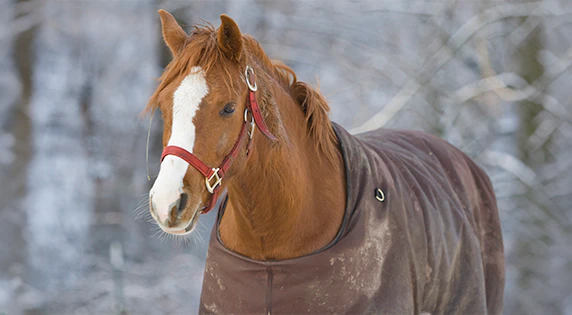
Is your horse still sweaty after training? A sweat rug or fleece rug can support the drying process and reduce the risk of your horse cooling down too quickly. Make sure the coat has had enough time to dry before turning your horse out again or putting on a thicker rug.
Does your horse have a particularly thick winter coat and regularly become very sweaty during training? You could consider clipping your horse. Find out more in our blog “Horses in autumn: coat care and hoof care“.
Maintaining fitness during autumn and winter
During autumn and winter, you may find that you cannot train as often or as intensively as usual. Try to avoid large changes in your horse’s workload. A horse that has very little exercise during the week and suddenly has a demanding training session at the weekend is exposed to a considerable increase in physical strain.
Try to spread exercise as evenly as possible throughout the week. If the weather or ground conditions temporarily prevent you from training, resume gently when conditions improve and gradually increase the duration and intensity.
Enjoy an active autumn together
Rain, wind and shorter days do not have to mean that you and your horse stop being active. By adapting your training to the weather and ground conditions, making sure you are clearly visible and allowing enough time for cooling down, you can continue to exercise safely and responsibly throughout autumn.