Service
Basket
Menu
5% off snacks with code SNACKS5 Read more

Insect hotels: how they work, placement and residents

Written by Meanne | Content Specialist |

In your garden, insects fulfil an essential role for plants, soil and biodiversity. At the same time, insect numbers are declining, partly due to the loss of habitats and nesting sites. An insect hotel can help by offering an extra place where insects can nest or shelter. In this blog, you can read what an insect hotel is, why it is used, where best to place the hotel and which insects you can expect to find in it.
What is an insect hotel?

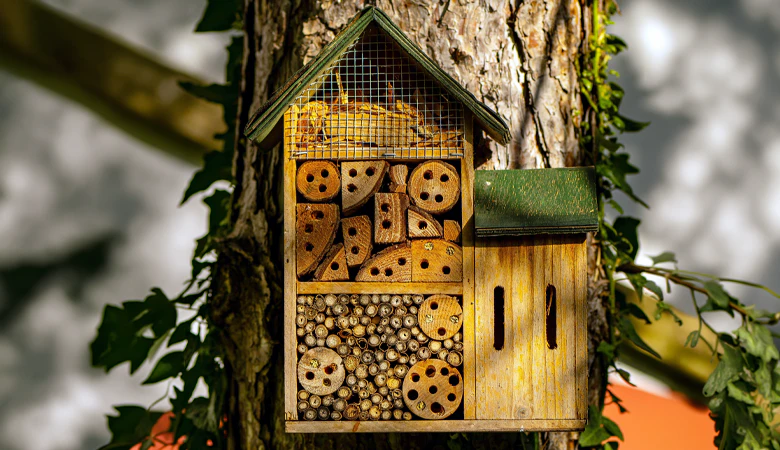
An insect hotel is a shelter and nesting place for different types of insects. It usually consists of a structure with natural materials such as wood, bamboo or pine cones, containing small openings and cavities. These are used to lay eggs or to stay temporarily. Insects such as solitary bees use the tubes or tunnels to build their nest in. They lay several eggs in them and provide these with food, such as a mixture of nectar and pollen. The larvae then develop in the insect hotel until they hatch and leave the nest. Depending on the structure, other insects may also use it, for example as a sheltered place against weather conditions.
Products for your garden

Why use an insect hotel?

Insects have fewer and fewer suitable places to nest and shelter. By placing an insect hotel in your garden or on your balcony, you offer an extra place to stay. Insects play an important role in nature and in your garden. For example, they contribute to the pollination of plants and form a food source for other animals, such as birds. In addition, there are insects that help control pests, such as aphids. The effect of an insect hotel depends on the conditions. The location, the surroundings and the quality of the insect hotel all play a role in its use. When the right conditions are met, an insect hotel can contribute to more insects in your garden.

Where should you place an insect hotel?

The location of an insect hotel has a major influence on its use. Insects prefer a warm and sheltered environment. Therefore, hang the insect hotel in a sunny or partly sunny spot, preferably facing south or south-east. Also make sure the insect hotel is sheltered from wind and rain, for example under a roof overhang or near a hedge. This helps keep the inside dry and suitable. Height also plays a role. Do not place an insect hotel on the ground, but hang it at least at knee height and preferably between around 1 and 2 metres. It is important that the hotel hangs securely and does not move. Finally, the surroundings are important. Hang the insect hotel in a place where there are enough flowers and plants nearby, so insects can easily find food. Once the insect hotel is hanging, it is best to leave it there and not move it again to prevent disturbance.

Which insects live in an insect hotel?

An insect hotel can be used by different types of insects, depending on its structure and surroundings. Solitary bees in particular often use them. They lay their eggs in the small tubes or tunnels and provide them with food for the larvae. Other insects can also use them. Ladybirds, for example, use them as a shelter or to overwinter. There are also insects such as earwigs and lacewings that nest there and help control pests in the garden. Butterflies use an insect hotel less often, but they can use it as a sheltered place. Exactly which insects come to an insect hotel depends, among other things, on the layout of the hotel and the environment in which it hangs.

How do you make the best use of an insect hotel?

An insect hotel is easy to use, but a few points of attention help keep it suitable. It is important to leave the insect hotel hanging all year round, because insects also use it to shelter or overwinter. Maintenance is usually not necessary. Insects clean up their nesting tunnels themselves or reuse existing tunnels. Cleaning an insect hotel can disturb the insects present and is therefore not recommended. It is also important that the insect hotel stays dry. Preferably choose materials that are highly resistant to moisture and check the hotel occasionally for wear. Over time, it may be necessary to replace the insect hotel because the quality deteriorates. Finally, patience plays a role. It can take a while before insects find the hotel and start using it. When the insect hotel hangs in a suitable place and the surroundings offer enough food, the chance of use increases.

Also read our other blogs

Squirrels

Feeding squirrels: what can they eat and what should they avoid?

Squirrels regularly appear in gardens, especially in autumn when they are busy gathering food for the winter. Because they are more visible during this period, they are also often given extra food. Not all food is suitable to give them, however, and an incorrect diet can affect their health and natural behaviour. In this blog, you can read about what squirrels naturally eat, which foods you can and should not give them, and what to keep in mind if you want to feed them in your garden. This way, you can help squirrels responsibly without disturbing them.

garden birds

The top 10 garden birds

In gardens, a number of bird species are spotted clearly more often than other species. These birds are among the most common garden birds. Every year, garden birds are counted to gain insight into how birds use gardens. With this information, birds can be better protected and supported. Based on these counts, we have listed the most popular species. In this blog, you can read which garden birds these are and how to recognise them.

How do you create an insect-friendly garden?

Insects play an important role in your garden and contribute to the health of plants, soil and biodiversity. At the same time, insect numbers are declining, which affects the balance of nature. In this blog, you can read why insects are indispensable, what happens if they disappear, and how to make your garden more attractive to these useful animals. You will also discover what you should avoid and how to create an insect-friendly garden step by step.

More tips