Service
Basket
Menu
Great savings in our Summer Deals! Read more

Lovebird: from care to nutrition

Written by Anne |

The lovebird is one of the most popular pet birds. Thanks to its compact size, colourful feathers and lively personality, this small parrot is a favourite among many bird enthusiasts. Are you planning to buy a lovebird or would you like to learn more about its care, nutrition and behaviour? In this blog, you'll find everything you need to know.
What is a lovebird?

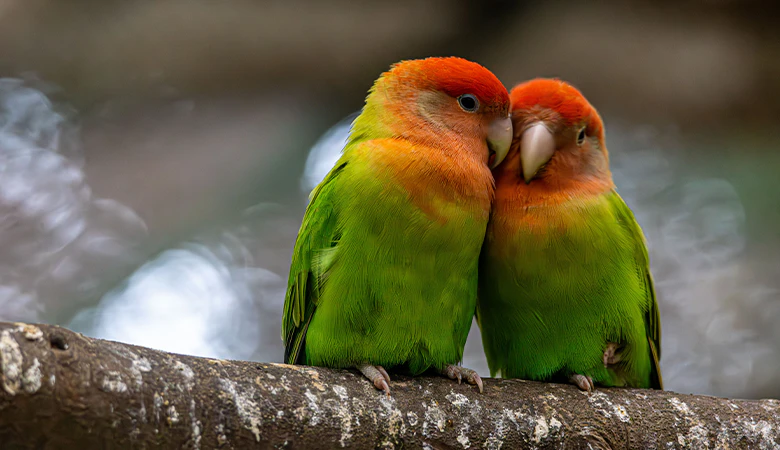
A lovebird (Agapornis) belongs to the parrot family and is known for its affectionate nature. There are several species of lovebird, including:

  • Fischer’s lovebird (Agapornis fischeri)
  • Rosy-faced lovebird (Agapornis roseicollis)
  • Masked lovebird (Agapornis personatus)
  • Lilian’s lovebird (Agapornis lilianae)
  • Red-headed lovebird (Agapornis pullarius)

These small parrot species grow to an average length of 13 to 17 centimetres and are known for their curious, intelligent and social nature.
Popular products for a lovebird

Buying a lovebird: what should you look for?

Buying a lovebird is not a decision to take lightly. These birds can be part of your family for many years and require daily attention.

When buying a lovebird, pay attention to the following:

  • Buy from a reputable breeder or a specialist bird shop.
  • Choose a bird with bright eyes, clean feathers and an active appearance.
  • Ask about the bird’s age, origin and health.
  • Check whether the bird is ringed, where applicable.

Also consider in advance whether you want to keep a single bird or a pair. Lovebirds are naturally very social and are often happier with another lovebird. If you keep a single bird, you will need to spend plenty of time each day providing attention and enrichment.

How much does a lovebird cost?

The price of a lovebird depends on the species, age and colour mutation. On average, a lovebird costs between £25 and £85 per bird. Special colour varieties may cost more.

In addition to the purchase price, there are ongoing costs, including:

  • A spacious bird cage or aviary;
  • High-quality food;
  • Toys and perches;
  • Cage bedding;
  • Veterinary check-ups.
  • Lovebird care

Housing

A lovebird needs plenty of space to climb, fly and play. Choose a spacious cage that is wider than it is tall and place several natural wooden perches at different heights. Furnish the cage with toys, climbing equipment and chewable materials to prevent boredom and encourage natural behaviour. Always provide fresh drinking water and place the cage in a quiet location, away from draughts and direct sunlight. Ideally, allow your lovebird to fly safely outside its cage every day in a bird-safe room to ensure it gets enough exercise.

What does a lovebird eat?

A healthy diet consists of more than just seeds.

A varied diet includes:

  • High-quality pellets as the staple food;
  • A limited amount of seeds;
  • Fresh vegetables such as peppers, broccoli, carrots and courgettes;
  • Fruit as a healthy treat, for example apple (without the seeds), grapes or blueberries;
  • Herbs and leafy greens such as dandelion leaves or basil.

Also provide suitable chew toys regularly to help keep your bird’s beak healthy.

How long does a lovebird live?

With proper care, a lovebird lives on average 10 to 15 years. Some birds even reach 20 years of age or older. A healthy diet, plenty of exercise, mental stimulation and regular health checks all contribute to a long and healthy life.

Can a lovebird talk?

Many people wonder whether a lovebird can talk. Unlike larger parrot species, lovebirds are generally not known for talking. Some birds learn to imitate a few words or sounds, but most communicate mainly through whistles and various calls. They are, however, highly intelligent. With positive training, they can learn a variety of tricks and often respond well to their name.

Toys for birds

Lovebird behaviour

Lovebirds are energetic, curious and intelligent birds. They enjoy climbing, chewing and exploring their surroundings. They are also highly social animals that need plenty of interaction with another lovebird or their owner. Some lovebirds can also display territorial behaviour, especially during the breeding season.

To prevent boredom, it is important to provide plenty of variety and mental stimulation. A lack of enrichment may lead to unwanted behaviour, such as excessive screaming or feather plucking.

Toys and enrichment

Because lovebirds are highly intelligent, they need daily mental stimulation. Toys not only help prevent boredom but also encourage natural behaviours such as climbing, foraging and chewing. Suitable options include foraging toys, ropes, climbing ladders, swings and safe wooden chew toys. Rotating toys regularly helps keep their environment interesting and stimulating.

Is a lovebird a suitable pet?

A lovebird is a suitable pet for people who have time every day for care, attention and interaction. Although these birds are small, they need plenty of exercise, enrichment and social contact. With the right diet, a spacious living environment and enough mental stimulation, a lovebird can become a healthy, active and friendly companion that you can enjoy for many years.

Read our other blogs too!

More tips