Service
Basket
Menu
5% off snacks with code SNACKS5 Read more

How do you prevent boredom in birds?

Written by Mara | Dierenarts |

Birds are intelligent and active animals that spend a large part of their day being busy in the wild. They fly, search for food, chew, climb and often have a lot of social interaction. In a living room or aviary, many of these natural activities disappear. As a result, boredom can quickly arise. This is not without risk to their health. Boredom in birds can lead to both mental and physical problems.
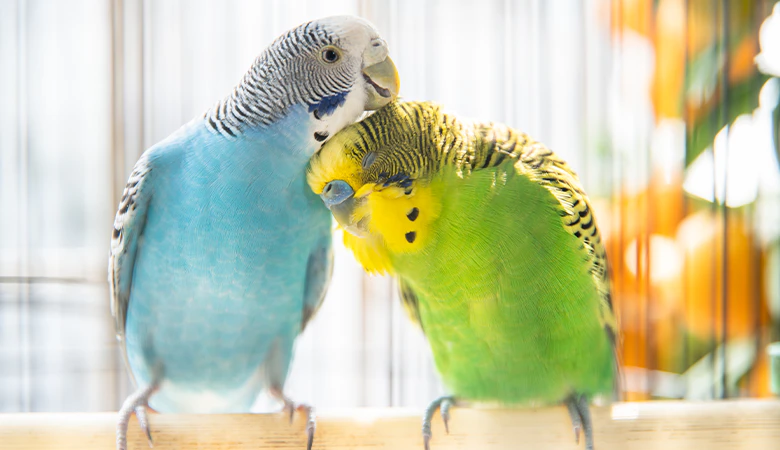
2 budgerigars next to each other

Why is boredom a serious problem?

A bird that is bored can show this in different ways. Common signs include feather plucking or even self-harm, but behavioural issues such as screaming or aggression can also occur. Some birds become quiet and withdrawn instead, which may indicate apathy or even depression.

You may also see stereotypical behaviour, such as repetitive pacing or obsessive actions. The stress associated with this can weaken the immune system, making birds more susceptible to illness.

In short: boredom has a major impact on your bird’s wellbeing and should be taken seriously.
Relevant products

Causes of boredom in birds

Boredom in birds can have several causes:

  • A cage that is too small
  • Lack of toys
  • Lack of stimulation and enrichment
  • Too little social interaction

A cage that is too small

A living space that is too small limits a bird’s freedom of movement. As a result, it cannot release its energy and becomes frustrated more quickly. Make sure you provide a cage or aviary that is spacious enough for your bird to fly, climb and move around. The furnishing also plays an important role. With natural perches, bridges and climbing materials, you can make the space more interesting. For example, explore the options within our range of cage and aviary furnishing.

Lack of toys

Without toys, a bird has little to keep itself occupied. In the wild, they are constantly chewing, destroying and exploring. Toys help to stimulate this natural behaviour. Consider, for example, the Back Zoo Nature Super Shredding Ball, a toy that is ideal for destroying and exploring, or the Back Zoo Nature Willow Tunnel, where birds can crawl through and chew on.

Lack of stimulation and enrichment

Simply hanging toys is not enough. Birds need challenge and variety. You can provide mental stimulation with puzzles such as the Back Zoo Nature Brain Trainer Cups.

You can also offer food in a different way. In the wild, birds spend a large part of their day searching for food. In a cage, food is often simply placed in a bowl. By hiding food in toys, such as a Back Zoo Nature Sola Star, Forest Ring or Cardboard Treat Board, eating becomes an activity again.

Too little social interaction

Many bird species are true social animals. When they are kept alone and receive little attention, this can lead to loneliness and boredom.

If you have one bird, it is important to make time for interaction every day. For suitable species, you may also consider adding a companion, provided this can be done responsibly.

Variation is essential

Birds enjoy change. Therefore, regularly rotate toys and rearrange the cage layout. By adding new elements or moving existing toys, the environment remains interesting. Physical stimulation is also important. Consider climbing objects such as a Back Zoo Nature Sisal Rope, which helps keep your bird active.

Boredom in birds is unfortunately a common but often underestimated problem. It can lead to serious health and behavioural issues, but fortunately it can be prevented. With sufficient space, varied toys, mental challenges and social interaction, you can give your bird a rich and healthy life. This ensures your bird not only survives, but truly thrives.

Do you have any questions about boredom in birds? Please contact us via veterinarian@vetsend.co.uk.


Sign up for our newsletter

Also read our other blogs

More tips
image (20)

About the author

Mara van Brussel-Broere, Veterinarian at Vetsend

Graduated as a companion animal veterinarian from Utrecht University, she uses her practical experience to advise customers and share knowledge at Vetsend. She finds it important to provide pet owners with clear information about health and wellbeing.

Read more about Mara