How can you recognise osteoarthritis in your cat?
Osteoarthritis in cats is not always easy to recognise. While dogs with joint problems sometimes limp noticeably, cats often show more subtle changes in their behaviour. For example, a cat that previously jumped onto the windowsill with ease may suddenly prefer to remain on the floor. Other changes in daily life can also indicate osteoarthritis.
Possible symptoms of osteoarthritis in cats include:
- Jumping less often or not as high
- Difficulty climbing stairs
- Moving stiffly, especially after sleeping or resting
- Playing and moving less
- Sleeping more or withdrawing more often
- Paying less attention to grooming their coat
- Reacting irritably or being less willing to be touched
- Difficulty getting into and out of the litter tray
As these signs can also have other causes, it is advisable to contact your vet whenever you notice changes in your cat’s behaviour or movement. Your vet can investigate whether osteoarthritis is present.
What can you do if your cat has osteoarthritis?
If your cat has osteoarthritis, it is important to minimise unnecessary strain on the joints and ensure that any pain is treated appropriately. Although the condition cannot be cured, the right guidance and a few adjustments to daily care can make a significant difference to your cat’s comfort. The approach often consists of a combination of different adjustments.
1. Joint supplements
Joint supplements can be a valuable addition for cats with osteoarthritis. These supplements may contain omega-3 fatty acids, type II collagen, glucosamine or chondroitin. The omega-3 fatty acids EPA and DHA play a role in inflammatory processes and can help support joint function. Type II collagen is a natural component of joint cartilage and is used in supplements to support the joints. Scientific evidence for ingredients such as type II collagen, glucosamine and chondroitin in cats with osteoarthritis is still limited. Supplements are therefore not a substitute for appropriate pain treatment from a vet.
2. Special food for the joints
In addition to supplements, you can also provide an adapted diet to support your cat with osteoarthritis. These special dietetic foods are formulated to support joint metabolism and mobility. They contain increased levels of omega-3 fatty acids and an adapted combination of nutrients. One example is Hill’s Prescription Diet j/d Feline. The most suitable food depends on factors including your cat’s age, weight and overall health.
3. Medication from the vet
Osteoarthritis can be very painful. Effective pain treatment is therefore often an important part of the approach. Various medicines are available to treat pain caused by osteoarthritis. The most commonly used options are:
- Solensia (frunevetmab): this is a monthly injection containing monoclonal antibodies that target NGF, a protein involved in transmitting pain signals. This can reduce pain caused by osteoarthritis.
- Metacam (meloxicam): an anti-inflammatory painkiller (NSAID) that reduces pain and inflammation. It is usually given to cats as a liquid that can easily be administered over their food.
- Onsior (robenacoxib): an anti-inflammatory painkiller (NSAID) that reduces pain and inflammation. In cats, it is primarily licensed for short-term use for certain conditions and not specifically for the long-term treatment of osteoarthritis.
Your vet will determine which medication is most suitable. The severity of the symptoms, your cat’s age, any other health problems and your cat’s individual needs will be taken into account. Never give your cat human painkillers on your own initiative, as these can be extremely harmful.
4. Keep your cat at a healthy weight
A healthy body weight is particularly important if your cat has osteoarthritis. Being overweight places greater strain on the joints, which can make movement less comfortable. Is your cat carrying a few extra kilograms? Gradual weight loss can help improve mobility and reduce strain on the joints. However, do not allow your cat to lose weight too quickly, as this can pose health risks. Together with your vet, you can create a suitable feeding plan that takes your cat’s energy requirements and activity level into account.
5. Adapt the living environment
A few simple adjustments can make your cat’s daily life considerably more comfortable. Cats with osteoarthritis may have difficulty reaching their favourite places. By placing a step or a ramp next to the sofa or windowsill, your cat will not need to make such large jumps. A litter tray with a low entrance and non-slip mats on smooth floors can also make movement easier.
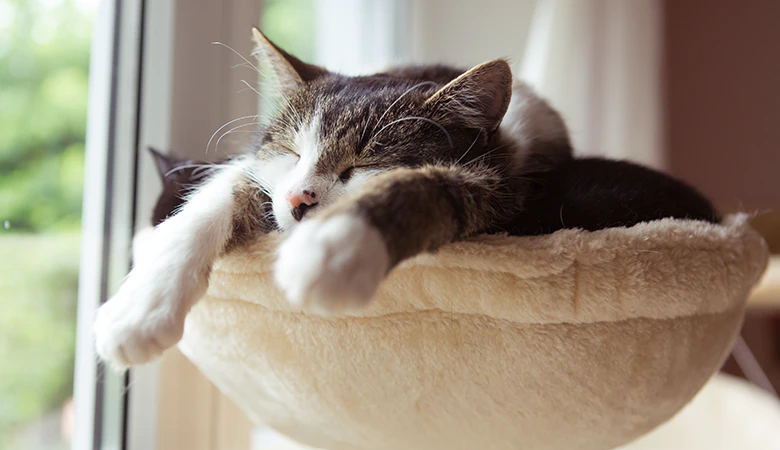
A comfortable sleeping area is also important. An orthopaedic cat bed can provide additional support and distribute pressure across the body. A warm cat bed or a sleeping area in a warm location can also be pleasant for cats with stiff joints. Make sure that the temperature is not too high and that your cat can always choose to lie somewhere else.
Also try to make food, water and favourite resting places easy to reach. This means your cat will need to make less effort to access the most important facilities.