Letting your cat outside at night: is it sensible?
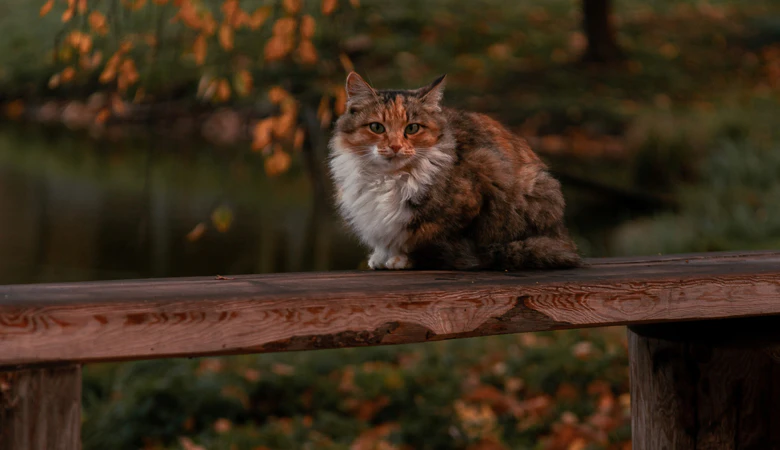
There is no general rule stating that a cat should not go outside at night. Whether it is sensible depends greatly on the surroundings, your cat’s temperament and the risks nearby.
The situation in a quiet rural area may be very different from that in a residential area with heavy traffic. During dark hours, cats are more difficult for motorists, cyclists and other road users to see. Cats may also travel farther from home at night to hunt or explore their territory.
Would you prefer to keep your cat indoors at night? Establish a new routine gradually. For example, call your cat indoors around mealtime and then offer a meal, a play session or another activity. This makes coming home part of a predictable routine.
A reflective collar for better visibility
A reflective cat collar can help your cat stand out when light from a car or bicycle lamp shines on it. The Rogz Beltz AlleyCat is one example. This collar contains reflective material that can make your cat more visible in the dark.
However, a collar does not make a cat completely safe in traffic. Reflective material also only works when light shines on it.
The safety clasp on a collar is particularly important for cats. An outdoor cat’s collar can become caught on a branch, fence or other object. Therefore, only use a collar designed for cats that can release under sufficient pressure. Also check the fit and the operation of the safety clasp regularly.
Cat flaps and cold draughts
A cat flap gives your outdoor cat plenty of freedom, but it can also be a source of draughts in winter. Older cats and cats that like sleeping close to the flap may be particularly affected.
Check in autumn whether the cat flap still closes properly. A worn or poorly fitting flap may blow open in strong winds or continually let in cold air. A cat flap with a good seal or insulating properties can limit heat loss.
Preferably, do not place the food bowl, drinking water or favourite sleeping spot directly beside a draughty cat flap. Make sure your cat has a dry, warm and draught-free place to rest after a cold or wet trip outside.
When is it too cold for a cat?
There is no exact outdoor temperature at which it becomes too cold for every cat. How well a cat tolerates the cold depends on factors including its coat, age, health, body condition, familiarity with being outdoors and the weather conditions.
A healthy adult outdoor cat with a good winter coat can generally tolerate the cold better than a kitten, senior cat, thin cat or cat with a thin or almost entirely absent coat. Moisture and wind are also important. A wet coat combined with low temperatures and strong wind can cause a cat to lose body heat much faster than dry, windless winter weather.
Extra caution is advisable at temperatures around or below freezing. Make sure your cat always has access to a dry, sheltered and preferably warm place. It is better not to leave vulnerable cats outside for prolonged periods in severe cold.
How can you tell that your cat is cold?
A cat experiencing cold may start seeking shelter and warm places, curl up tightly or tuck its paws underneath its body. Shivering may also occur.
If a cat becomes very cold, lethargic or weak, is less responsive or moves unusually slowly, do not wait to see whether it improves. Bring the cat into a warm, dry environment and contact a vet. Severe hypothermia can be dangerous.
During frosty weather, also pay attention to the ears, tail and paw pads. These body parts are more sensitive to extreme cold.
Make coming home appealing
A warm place in the home makes returning indoors after an outing more appealing to an outdoor cat. Provide a quiet sleeping place, sufficient water and perhaps a short play or feeding session when your cat comes home.
For cats that spend less time outside in winter, it is wise to provide sufficient stimulation indoors too. Playing, climbing, scratching, searching and hunting games help keep your cat physically and mentally occupied.
A safe winter for your outdoor cat
An outdoor cat can still enjoy its freedom during autumn and winter. However, take the shorter days, lower temperatures and reduced visibility into account. A cat flap that closes properly, a warm place to come home to and perhaps a reflective safety collar can all help.
Consider your own cat and living environment in particular. During extreme weather, severe frost or heavy traffic, it may be wiser to keep your cat indoors temporarily, especially at night.
Do you have any questions? Please contact us at veterinarian@vetsend.co.uk.