Service
Basket
Menu
This week up to 33% off dental care for your pet Read more

Pigeon

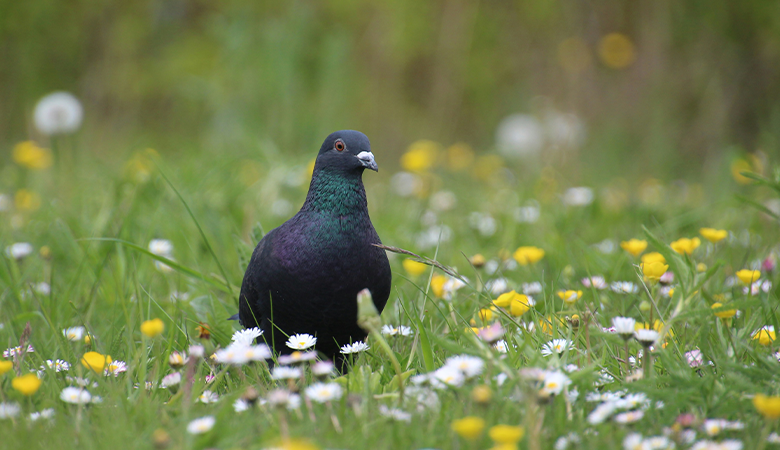
The pigeon is one of the oldest domesticated bird species in the world and has lived alongside humans for thousands of years. Originally, it descends from the rock dove, which was mainly found along coastlines and rocky regions in Europe, Asia and North Africa. Nowadays, we mostly know the pigeon as a city dweller: a familiar creature often seen wandering across squares, in parks and atop buildings. Pigeons appear in a wide range of colours, from the classic blue-grey with a shimmering neck, to white, brown, black or even mottled. Thanks to their versatility, strong sense of direction and calm nature, pigeons are not only admired as urban animals, but are also kept as ornamental birds, racing pigeons or carrier pigeons.

Characteristics

Country of origin: Europe, Asia and North Africa
Also known as: Feral pigeon, carrier pigeon, wood pigeon and fancy pigeon
Colours and coat types: Naturally blue-grey with shimmering neck feathers. Domesticated pigeons appear in countless colours, such as white, black, brown, red, mottled, and various patterns.
Weight: 200 – 400 g
Life Expectancy: 6 – 20 years
Health risks: Paramyxovirus, paratyphoid (Salmonella), coccidiosis, worm infestations, respiratory issues, red mite, feather mite, trichomonas and egg binding.

Character profile

Singing ability
Social behaviour
Tameness
Playfulness
Noise level
Space requirements
Ease of care
Suitable for beginners

Popular products for the pigeon

Origin of the Pigeon

The domesticated pigeon descends from the rock dove (Columba livia), which originally inhabited Europe, Asia and North Africa. Thanks to their strong homing instinct, social behaviour and adaptability, rock doves quickly became associated with human settlements.

Domestication began thousands of years ago in the Middle East, where people discovered that pigeons would always return to their home lofts, even over long distances. This made them ideal natural messengers for traders, rulers and later also armies.

For centuries, pigeons played a vital role in communication – from carrying military dispatches to reporting ship positions.

From this history, various breeds emerged, including the carrier pigeon, bred for speed and endurance. Today’s city pigeon is ultimately a descendant of these early domesticated birds.

Appearance and Song

Pigeons have a compact, sturdy body with a rounded chest, short legs and strong wings that allow them to fly long distances. They have a small head with a gentle beak and round, expressive eyes.

The original rock dove is blue-grey with a green and purple sheen on its neck, but domesticated pigeons come in countless colours and patterns, such as white, black, red, brown and mottled. Their body shape can also vary greatly, especially in fancy pigeons, which may feature curled feathers, a distinctive posture or an eye-catching tail.

Unlike songbirds, pigeons do not sing; instead, they produce a soft, rhythmic cooing used for communication within the group, courtship displays and marking territory. This sound is low, gentle, and generally not considered disruptive.

What does a pigeon eat?

Pigeons are naturally granivores, meaning they primarily eat grains and seeds. In the wild, they forage for a varied diet to obtain all the nutrients they need. Their food includes wheat, barley, corn, oats, millet and seeds from wild plants and grasses. These grains form the foundation of their energy supply; the carbohydrates provide pigeons with the strength to fly and keep warm.

In smaller amounts, pigeons also eat greens such as young leaves, blades of grass and soft plant parts. These provide extra vitamins and fibre to support overall health. For additional protein—especially during growth or breeding periods—pigeons may also consume small insects, slugs and larvae. These protein-rich snacks help with the development of young pigeons and are valuable during moulting.

An essential part of a pigeon’s diet is grit, which consists of small stones and minerals like oyster shell, redstone and gastric grit. Since pigeons have no teeth, they use grit in their gizzard to grind up food. It also provides important minerals, including calcium, which contribute to strong bones and firm eggshells.

Feeding domesticated pigeons

Pet pigeons, fancy pigeons and racing pigeons are usually fed a balanced pigeon mix. Depending on the season, their diet is adjusted:

  • Moulting: to supply more protein and amino acids
  • Breeding: for extra calcium and energy
  • Racing season (for carrier pigeons): energy-rich mixes with high-fat seeds (such as sunflower seeds or peanuts in small amounts)

Many pigeon keepers also offer supplements like vitamins, minerals, brewer’s yeast or herbal blends to support their immunity.

What do city pigeons eat?

Unfortunately, city pigeons often feed on leftover food from people, such as bread, chips or other snacks. This is inadequate and unhealthy for pigeons, because:

  • Bread contains too few nutrients
  • Salt, fat and sugar are harmful
  • It can lead to deficiencies or digestive problems

That’s why it’s far better to care for pigeons in your garden with a suitable seed mix, so you can support them in a healthy way.

How old does a pigeon get?

The lifespan of pigeons varies greatly between wild and domesticated birds:

  • City pigeons typically live much shorter lives than tame pigeons, around 3 – 6 years. This is due to predators and limited food quality.
  • mesticated pigeons live on average 10 – 20 years. Some well-cared-for fancy or racing pigeons can even reach 20 years or more.

What is a baby pigeon called?

A young pigeon is called a “squab” or “nestling”. Newly hatched pigeons are nearly featherless, have closed eyes, and are completely dependent on their parents. They grow rapidly thanks to the nutritious “pigeon milk” produced by both parents.

What is a carrier pigeon and how does pigeon post work?

A carrier pigeon is a pigeon that has been specially selected and trained for its homing ability, speed and endurance. These traits allow the pigeon to always return to its own home loft, even from great distances. In the past, messages were placed in small tubes attached to the pigeon’s leg, after which the bird would find its way home entirely on its own. This is how important messages were sent between cities, armies and trading posts.

Racing pigeons and the sport of pigeon racing

Today, pigeon racing is still a well-established sport, in which racing pigeons (or flying pigeons) fly distances that can span hundreds of kilometres. The sport focuses on:

  • Speed (which pigeon returns to the loft first)
  • Endurance (covering long distances, up to over 1000 km)
  • Consistency (delivering top performance regularly)

Pigeon fanciers train their birds with great care, often with daily practice flights and specialised diets tailored to fitness and recovery. Races are precisely recorded using modern systems such as electronic rings.

The racing pigeon is therefore not just any pigeon, but the result of years of selective breeding, training and expertise.

How long does a pigeon incubate its eggs?

The incubation period of pigeons is around 17 to 19 days. Both parents take turns incubating the eggs:

  • The female usually sits on the nest at night
  • The male often takes over during the day

After hatching, the chicks remain dependent on their parents for several weeks. In the beginning, they are fed with what’s known as “pigeon milk” – a special, highly nutritious substance. This isn’t milk like that of mammals, but a soft, cheese-like secretion produced in the crop lining of both the male and female.

Key characteristics of pigeon milk include:

  • Rich in proteins and fats: essential for rapid growth
  • Contains antibodies: supports the young immune system
  • Regurgitated directly into the chicks’ beaks
  • Provided during the first 7–10 days of life

During this period, young pigeons grow at an astonishing rate. As they get stronger, the parents gradually transition to half-digested seeds and eventually to regular food.

How fast can a pigeon fly?

Pigeons are known for their impressive flying speed. A well-trained racing pigeon can easily reach an average of 60 to 80 km/h, and with favourable wind conditions, even up to 120 km/h. In addition, they have exceptional stamina and can cover long distances while navigating accurately back to their home.

Are pigeons suitable for the garden?

Some people enjoy feeding pigeons in the garden, while others do not. Keep the following points in mind:

  • Pigeons tend to return to places where food is plentiful.
  • They sometimes eat food intended for smaller garden birds.
  • It’s better to place mixed seed for garden birds in raised feeders, so smaller birds have a better chance.

If you do want to attract pigeons, you can scatter grain or feed in a quiet spot – but be mindful of potential nuisance and your neighbours.

What does a pigeon fancier do?

A pigeon fancier is someone who keeps pigeons for sport, breeding or hobby, and is involved daily with the care and performance of their birds. This includes providing proper nutrition, keeping the loft clean, monitoring their health, and creating optimal living conditions with good ventilation and enough space. A pigeon fancier closely observes their pigeons, as changes in behaviour or condition can reveal a lot about their health or racing form.

Training also plays a key role. Racing pigeons are regularly taken on training flights, with distances gradually increasing to build stamina and strengthen their homing ability. Feeding is often adjusted to the season: energy-rich during the racing period, protein-rich during moulting, and balanced during rest periods.

Selecting and breeding the right birds is another vital part of the fancier’s work. By focusing on traits like speed, recovery and temperament, the goal is to develop strong, performance-driven bloodlines.

In this way, a pigeon fancier combines care, knowledge and passion in a centuries-old tradition that continues to evolve.

Care and housing of the pigeon

Pigeons need plenty of space to fly; a standard cage is therefore not suitable. They are usually kept in a dovecote, spacious aviary or loft where they can land, perch and move about freely. The loft should be large enough for short flights, well-ventilated but draught-free, and most importantly, dry to prevent health issues. Fancy pigeons do well in an outdoor aviary, while racing and sport pigeons are often kept in specially designed lofts with flight openings.

Layout

A pigeon loft should be well-organised and easy to clean. Sturdy perches and nesting boxes provide rest and designated breeding spots, and food and water containers are best placed in areas that stay clean. A floor covering of wood shavings or pellet bedding helps keep the loft dry, and offering enough nesting space helps avoid stress between pairs. The loft should be well lit, without exposing the pigeons to harsh sunlight or heat.

Care

Pigeons require fresh food and clean drinking water every day, supplemented with grit and minerals for proper digestion and strong bones. Regular cleaning is essential to prevent parasites and respiratory problems. Keep an eye on changes in behaviour, appetite or feather condition, as these can signal health concerns.

Pigeons also enjoy bathing in clean water, which helps with feather maintenance and overall well-being. Sport pigeons need additional training and tailored nutrition to stay in peak condition. For further support, feel free to explore our bird care pharmacy.

More tips