Service
Basket
Menu
Don’t miss our Crufts Deal: 5% off with CRUFTS5! Read more

Iguana

The Iguana (Iguanidae) is a commonly kept terrarium reptile and forms a diverse family of lizards that mainly occurs in Central and South America and on the Caribbean islands. Within this family there are several species, including the Green Iguana and the Rock Iguana. Depending on the species, iguanas live in tropical rainforests, dry coastal areas or rocky environments. Many iguanas are active during the day and spend a large part of their time in trees or in sunny spots where they can regulate their body temperature. Character and behaviour vary by species and individual, but iguanas are known to require space, calm surroundings and a consistent approach. Due to their size and strength, they are less suitable for inexperienced keepers. In captivity, it is important to replicate the natural habitat of the chosen iguana species as closely as possible, with sufficient climbing space, suitable temperature zones, UVB lighting and appropriate enclosure furnishings. This helps provide the basic needs and supports good condition and the overall wellbeing of your animal.

Iguana

Characteristics

Country of origin: Central and South America and the Caribbean islands
Also known as: Iguanidae
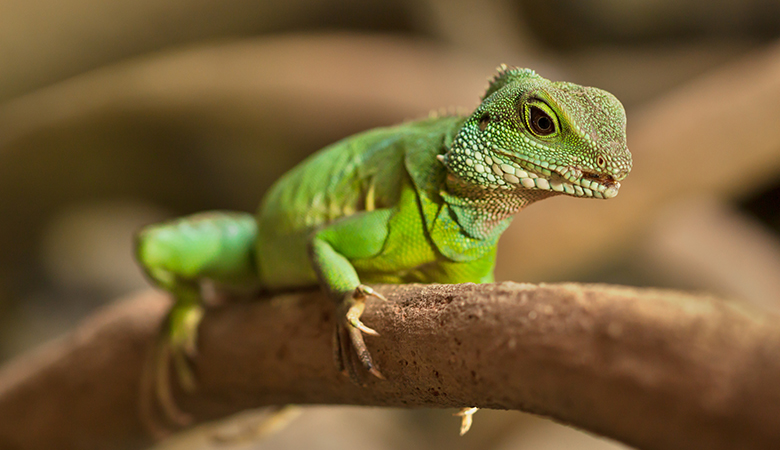
Body build: Generally a long and powerful body with a long tail. Characteristic features include well-developed claws, a distinct throat fold and a row of spines along the back and tail.
Colours and coat types: Colour and pattern vary by species. Many iguanas have green tones or grey-brown colours that help with camouflage. The skin consists of sturdy scales.
Weight: 500 - 8,000 g
Life Expectancy: 10 - 20 years
Health risks: Deficiencies in calcium and vitamins, metabolic bone disease (MBD), shedding problems and conditions caused by incorrect housing or nutrition.

Profile

Activity
Tameness
Ease of care
Space requirements
Environmental sensitivity
Nutritional needs

Popular products for the Iguana

Origin

Iguanas naturally occur in Central and South America and on the Caribbean islands. Depending on the species, they live in tropical rainforests, dry coastal areas, mangroves (special trees that grow in salt or brackish water) or rocky landscapes. Many iguanas are adapted to warm climates and spend a large part of their time in trees or in sunny spots where they regulate their body temperature. During cooler periods, they seek shelter among plants and shrubs or in burrows and rock crevices. Because they occur across different habitats, iguanas have adapted to a wide range of climate conditions.

Appearance and behaviour

The appearance of iguanas varies by species, but they generally have a long and powerful body with a long tail. Characteristic features include sturdy scales, well-developed claws, a distinct throat fold and, in many species, a row of spines along the back and tail. Colour ranges from green tones and grey-brown to more pronounced colours, depending on the species and sometimes also on age or sex. Iguanas are active during the day and spend a lot of time basking to maintain their body temperature. Many species are skilled climbers and use branches and elevated spots in their environment. Behaviour varies by species and individual, but iguanas can be alert and territorial. Like other reptiles, iguanas shed their skin regularly. Proper humidity and suitable enclosure furnishings support smooth shedding and contribute to the animal’s wellbeing.

All about the Iguana

Which Iguana species exist?

The iguana family consists of several species that mainly occur in Central and South America and on the Caribbean islands. Within this family there are clear differences in size, habitat and appearance. Below are some well-known and commonly kept species:

  • Green Iguana
  • Lesser Antillean Iguana
  • Rock Iguana
  • Rhinoceros Iguana
  • Black Iguana


How old can an Iguana get?

The life expectancy of an iguana varies by species and strongly depends on its care. Many iguanas can live on average between 10 and 20 years in captivity when they are housed and fed properly. Factors such as a spacious enclosure, correct temperature zones, sufficient UVB lighting and a balanced plant-based diet play an important role in reaching a higher age. Incorrect housing or nutrition can shorten life expectancy and cause health problems.

Are Iguanas afraid of people?

Iguanas are naturally alert animals. In the wild they react attentively to potential threats, including larger animals. In captivity they may also initially respond cautiously or nervously around people. With calm and consistent interaction, some iguanas can become accustomed to their caretaker and become less sensitive to stress. However, it remains important to take their natural behaviour into account. Sudden movements or unexpected approaches can trigger a startled or defensive reaction. A calm approach and a consistent routine help to build trust.

What does an Iguana eat?

What an iguana eats varies by species, but most are herbivores. In the wild they mainly feed on leaves, flowers, shoots (young, newly sprouted parts of a plant) and fruits. Their diet is rich in fibre and contains relatively little protein.

In captivity, their diet consists of a varied mix of leafy greens and other suitable plant-based foods. It is important to provide enough variety and a proper calcium to phosphorus ratio to prevent deficiencies and bone problems. If necessary, a calcium and vitamin supplement can be added. Fresh drinking water should always be available.

Can you pet an Iguana?

An iguana is not a cuddly pet. Although some iguanas can become accustomed to calm and consistent handling, they remain naturally alert animals. Not every iguana accepts touch or enjoys being petted. When an iguana is approached calmly from a young age, it may become more tolerant of handling. However, it is important to always respect the animal’s behaviour. Signs of stress or defensive behaviour, such as turning away, whipping the tail or raising the crest, indicate that the iguana wants to be left alone. Calmness, patience and a careful approach are essential when interacting with these reptiles.

What is Metabolic Bone Disease (MBD)?

Metabolic Bone Disease (MBD) is a common condition in reptiles such as the iguana, caused by a deficiency of calcium, vitamin D3 or insufficient UVB light. These three factors are connected: without sufficient UVB light the body cannot produce vitamin D3, and without vitamin D3 calcium cannot be absorbed properly.

A lack of calcium weakens the skeleton and affects the bone structure. The first signs of MBD are often subtle:

  • A soft lower jaw
  • Trembling in the legs
  • Reduced appetite
  • Lethargic behaviour
  • In a later stage, skeletal deformities, crooked legs or spine, and even fractures may occur

MBD can be prevented by regularly replacing UVB lighting (usually every 6 to 12 months), providing sufficient calcium and vitamin supplements, and ensuring the correct temperature and nutritional balance. A properly set up terrarium and a balanced diet are therefore essential to prevent this condition.


Care and housing of the Iguana

Caring for an iguana requires a spacious and well thought-out enclosure that matches the natural lifestyle of the species. Many iguanas live in trees and need height, sturdy branches and plenty of space to move. The enclosure should be large enough to create different climate zones and allow natural behaviour. A spacious living environment contributes to activity, muscle development and overall wellbeing. Always provide a clearly defined warm zone and a cooler zone so the iguana can choose a suitable place.

Temperature and lighting

Iguanas are cold-blooded and depend on their environment to regulate their body temperature. The enclosure should contain different temperature zones, including a clear heat spot for basking. Temperatures should remain stable and be monitored carefully. Lighting is generally used for 10 to 12 hours per day to create a natural day and night rhythm. UVB lighting is essential for iguanas as it helps with calcium absorption and supports healthy bone development. Always use a reliable thermostat to regulate heat sources safely.

Enclosure setup

The enclosure setup should match a climbing environment with areas for basking. Sturdy branches, raised platforms and hiding places are important. Choose materials that are safe and easy to clean. In addition, suitable bedding is required that matches the humidity requirements of the iguana species. A spacious water dish with fresh drinking water should always be present.

Care

Iguanas shed their skin regularly. Suitable humidity supports smooth shedding. Check that the skin has fully come off, especially around the toes, the tip of the tail and the crest. Daily removal of droppings, refreshing drinking water and keeping the enclosure clean are also important for good hygiene. By regularly checking behaviour, appetite and body condition, you can detect changes in time and support the health of your iguana.


More tips