Which rodent is right for me?
Before buying a rodent, it is important to consider whether and which rodent suits you.
The guinea pig (Cavia porcellus) is a rodent originally from South America. In the wild, they live on grasslands and in mountainous areas, where they live in groups and feed on grasses and herbs. Thousands of years ago, guinea pigs were domesticated by indigenous people. Guinea pigs are known for their social and lively nature. They naturally live in groups and, as pets, feel most comfortable with companions of their own kind. With various sounds such as squeaking, purring, and whistling, they clearly express how they feel. They have a compact body with short legs and an almost invisible tail. Their teeth grow continuously throughout their lives, making fiber-rich food such as hay essential. Additionally, guinea pigs cannot produce vitamin C themselves and must obtain it through their diet. Thanks to their friendly nature and recognizable sounds, guinea pigs are beloved pets worldwide.

The guinea pig originates from South America, where its ancestors lived thousands of years ago on grasslands and in mountainous regions of countries such as Peru, Bolivia, and Ecuador. In these regions, they lived in small groups among rocks and dense vegetation, where they could hide from predators. Their diet mainly consisted of grasses, leaves, and herbs found close to the ground. Over 3000 years ago, guinea pigs were domesticated by indigenous people. They were kept as a source of food but also played a role in rituals and traditions. In the 16th century, guinea pigs were brought to Europe by Spanish explorers. There, they quickly became unique and popular pets. Today, guinea pigs are popular worldwide because of their friendly nature, recognizable sounds, and social character. Despite their long history as pets, they still retain many traits of their wild ancestors, such as their strong group instinct and preference for a safe, sheltered environment.
Guinea pigs are known for their friendly, gentle, and social nature. They are true group animals that feel most comfortable when living with others of their own kind, which is why keeping a guinea pig alone is not recommended. What makes guinea pigs extra special is that they are very communicative. With various sounds such as squeaking, purring, and whistling, they clearly express how they feel and communicate with each other. Although guinea pigs are often calm and friendly, they are still prey animals. As a result, they can be startled by sudden movements or loud noises. With patience and a calm approach, most guinea pigs can become tame, and some even learn to recognize their owner. Like other pets, each guinea pig also has its own personality: one may be curious and active, while another is more calm or cautious.
There are different guinea pig breeds, which mainly differ in coat type, coat length, and appearance. Unlike some other pets, guinea pig breeds differ less in character; the main variation lies in their coat and grooming needs. Below are the most well-known types.
In addition to these breeds, there are also other varieties and crossbreeds with different colors, patterns, and coat types. In practice, many guinea pigs are kept as pets without belonging to a specific breed. Their care and behavior are generally similar regardless of breed.
Read more about what your guinea pigs can eat in our blog: What can guinea pigs eat?
By providing a diet mainly consisting of hay, supplemented with good pellets, fresh vegetables, herbs, and additional vitamin C, a guinea pig receives everything it needs for healthy digestion, strong teeth, and a good immune system.
Guinea pigs are true group animals and feel most comfortable when living with others of their own kind.
Regardless of the group composition, sufficient space and multiple hiding places are important. This allows guinea pigs to avoid each other when necessary, helping to prevent conflicts and maintain a stable group.
Guinea pigs do not necessarily need toys like some other pets, but enrichment in their enclosure is very important. This helps prevent boredom and stimulates natural behaviors such as chewing, foraging, and exploring.
Many guinea pigs enjoy playing with simple and safe materials. Think of willow branches, chew sticks, or tunnels they can walk through and hide in. Hay racks or hay hidden in toys can also encourage guinea pigs to actively search for their food.
Bridges and houses are also very popular. These allow guinea pigs to hide and move around, which aligns with their natural behavior. It is important that toys are safe, have no sharp edges, and are made of materials suitable for chewing.
By occasionally changing or adding new elements to the enclosure, the environment remains interesting and guinea pigs stay active and curious.
A guinea pig lives on average 5 to 8 years. This can vary per animal, depending on factors such as diet, care, living environment, and genetics. Some guinea pigs live longer and can reach 8 to 10 years with good care, although this is less common.
An important factor for a long lifespan is proper nutrition. Guinea pigs have a sensitive digestive system and rely entirely on fiber-rich food. Unlimited hay, a good guinea pig pellet, and daily fresh vegetables (supplemented with vitamin C) help maintain their health. Because guinea pigs cannot produce vitamin C themselves, a long-term deficiency can lead to health problems.
Housing and social interaction also play a role. Guinea pigs are social animals and feel most comfortable when living with a companion. A spacious enclosure, a calm environment, and sufficient hiding places help reduce stress.
Yes, a guinea pig can live with a rabbit, but there are some important conditions.
The most important is that both species also have companionship from their own kind. This means you should keep at least two guinea pigs and two rabbits together. Guinea pigs and rabbits communicate very differently and do not always understand each other’s body language. When a guinea pig lives only with a rabbit, it can still feel lonely because it cannot share its natural social behavior with a fellow guinea pig.
It is also important that the enclosure offers enough space and safe hiding places. Guinea pigs are smaller and more vulnerable than rabbits. Therefore, there should be hiding spots that only guinea pigs can access, so they can retreat when needed. This helps prevent stress and possible accidents. For rabbits, it is also beneficial to have some elevated hiding spots that guinea pigs cannot reach.
Although cohabitation is possible, it is important to realize that guinea pigs and rabbits have different needs, for example in terms of diet and behavior. Therefore, it is often easier and safer to keep both species in their own groups.
Yes, guinea pigs can live outdoors, provided their enclosure is well adapted to the conditions. The enclosure must be spacious, dry, draft-free, and well insulated. It must also provide protection from rain, wind, direct sunlight, and predators.
In winter, extra attention is needed. Guinea pigs tolerate cold better when they gradually get used to it and when they live with companions, so they can keep each other warm. A well-insulated shelter with sufficient straw or hay helps retain heat.
In summer, shade and ventilation are important to prevent overheating. Guinea pigs are sensitive to high temperatures and must always have access to a cool place to retreat.
If the enclosure is safe, spacious, and sheltered, guinea pigs can be kept outdoors year-round. However, it is important to check daily whether they are healthy and eating and drinking sufficiently.
Guinea pigs do need attention, but in a different way than, for example, dogs or cats. They are social animals that feel most comfortable when living with one or more companions of their own kind. The company of another guinea pig is often more important than intensive human interaction. This does not mean guinea pigs do not need attention from their owner. Regular calm interaction, feeding, cleaning the enclosure, and observing their behavior are part of daily care. Many guinea pigs learn to recognize their owner and will excitedly squeak when they expect food.
It is also good to take some time daily to check their health, such as eating behavior, droppings, and general behavior. Because guinea pigs are prey animals, they often hide illness until late. Regular attention helps to notice changes early.
Guinea pigs are naturally somewhat cautious because they are prey animals. Therefore, it may take some time before they truly get used to people. By handling them calmly and patiently, many guinea pigs eventually learn to trust their owner. It helps to speak softly to them, approach them calmly, and offer a piece of vegetable from your hand.
It is important not to suddenly pick up or chase guinea pigs, as this can cause stress. When they realize nothing scary happens and that something tasty often follows, many guinea pigs become more curious and less easily startled over time. With patience, they can become quite tame and may even come forward on their own when their owner is nearby.
Guinea pigs need a spacious enclosure where they can move, rest, and hide. Unlike some other rodents, guinea pigs are not climbers but true ground-dwelling animals. Therefore, floor space is especially important. A large cage or run with sufficient room to move helps keep the guinea pig active and healthy. The enclosure should be placed in a quiet area of the home, away from drafts, direct sunlight, and large temperature fluctuations. Guinea pigs feel most comfortable at a stable temperature between approximately 18 and 24 °C. As social animals, guinea pigs should be kept with at least one companion. This helps prevent boredom and stress and allows them to display natural behavior.
Also ensure there are enough hiding places, such as houses or tunnels. Guinea pigs are prey animals and like to retreat to a safe place from time to time. An absorbent bedding such as paper fiber or straw pellets helps keep the enclosure dry and comfortable. A layer of straw on top can provide a wonderfully soft sleeping area.
Good daily care helps keep a guinea pig healthy and comfortable. Because of their sensitive digestion, continuously growing teeth, and need for routine, it is important to maintain consistent care habits.
Proper guinea pig care includes:
Read more about what your guinea pigs can eat in our blog: What can guinea pigs eat?
By paying attention to these points daily, the living environment remains clean, the guinea pig receives proper nutrition, and any changes in behavior or health can be noticed quickly.
Before buying a rodent, it is important to consider whether and which rodent suits you.
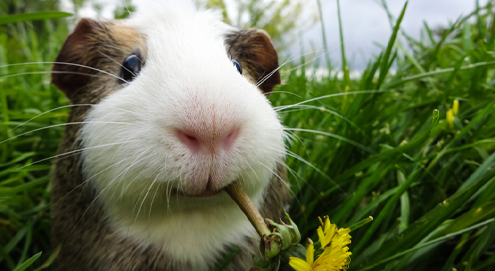
Guinea pigs are sociable pets that need a balanced diet to stay healthy and happy. But did you know that they cannot produce their own vitamin C and that their diet involves much more than just hay and vegetables? So, what can guinea pigs eat and what should be strictly avoided? And how can you treat them safely and responsibly? Discover everything you need to know about healthy nutrition, from the best snacks to the importance of daily vitamin C.

Dental problems in rabbits and rodents are more common than you think. Unfortunately, it is not always clear that it concerns problems with the teeth. We often see the same abnormalities in rabbits and rodents. However, in this article, we tell you everything you need to know about dental problems in rodents and rabbits.

Add products to view your basket
We use cookies to help us serve you better and more personally. Functional cookies ensure that the website works properly and have an analytical function. We also use technology to track your behaviour anonymously, both inside and outside our website. Personal data and cookies may be used for personalisation or advertising. Want to know more? Read our privacy policy and cookie statement here. If you choose to reject, we will only place functional and analytical cookies.