Service
Basket
Menu
Up to 30% off Hill's! Read more

Types of amphibians: what amphibians are there?

Written by Kelsey |

Amphibians are fascinating animals that live both in water and on land. They have unique characteristics that distinguish them from other groups of animals. In this blog, you can read about the different types of amphibians, how they live and which ones you could potentially keep as pets.
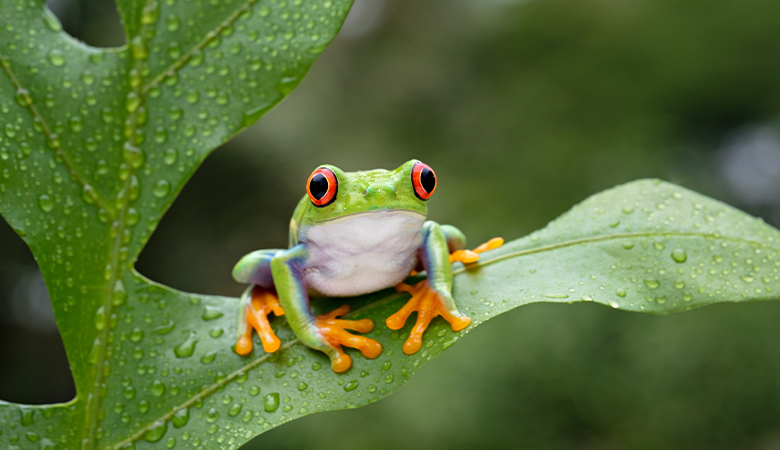
amphibians

What are amphibians?

Amphibians (Amphibia) are cold-blooded vertebrates that usually spend part of their lives in water and part on land. Many species begin life as larvae with gills, such as tadpoles, and develop into adult animals with lungs.

Characteristics of amphibians:

  • They live partly in water and partly on land
  • Their skin is thin and moist, often without scales
  • They breathe through their lungs and skin
  • They hatch from eggs, which are usually laid in water
  • They are cold-blooded, meaning their body temperature follows the temperature of their surroundings

What are the main groups of amphibians?

Amphibians are divided into three main groups:

1. Frogs and toads (Anura)

This is the largest and best-known group of amphibians. Frogs and toads have short bodies, long hind legs and no tail as adults. They are extremely well adapted for jumping and swimming.

Frogs usually have smooth, moist skin and often live near water.

Toads have rougher, drier skin and are more likely to live on land.

Well-known species:

  • Green frog
  • Common frog
  • Common toad
  • Tree frog
  • African clawed frog (popular as a pet)

Are they suitable as pets? Some species, such as the African clawed frog, are suitable for aquaterrariums. Other species are protected and may not be kept.

2. Salamanders and newts (Caudata or Urodela)

Salamanders have an elongated body with a tail and legs at the sides. They are less well known than frogs, but just as interesting. Salamanders often live partly underwater and partly on land. Some species remain entirely aquatic.

Well-known species:

  • Fire salamander
  • Alpine newt
  • Axolotl (remains in its larval form throughout its life)

Are they suitable as pets? Yes, the axolotl in particular is a popular species to keep in an aquarium. It remains underwater and is relatively easy to care for with the right knowledge.

Caecilians (Gymnophiona)

This is the least well-known group. Caecilians resemble earthworms or snakes in appearance. They have no legs, live underground and are rarely seen. They are not found in the Netherlands.

Well-known species:

  • Caecilia species
  • Ichthyophis species

Are they suitable as pets? No, these species are difficult to keep and are rarely found in the hobby.
Supplies for amphibians

Where do amphibians live?

Amphibians are found throughout the world, except in extremely dry or cold regions. They live in moist forests, near ponds, in swamps or underground. Because their skin absorbs water and oxygen, they are highly dependent on a moist environment.

Amphibians as pets

Would you like to keep an amphibian as a pet? There are several species that can be kept successfully, provided that you recreate their natural habitat properly:

Popular species to keep at home:

  • Axolotl: a calm aquatic species suitable for an aquarium
  • African clawed frog: active and easy to care for
  • Tree frogs: colourful and interesting to observe, but less suitable for handling

When caring for amphibians, pay attention to:

  • The correct temperature and humidity
  • A suitable enclosure or aquaterrarium
  • Hygiene and water quality, for aquatic species
  • A well-balanced diet, often consisting of insects, small fish or special food sticks

Please note: some native amphibians are protected and may not be kept.

What is the importance of amphibians in nature?

Amphibians play an important role in the ecosystem. They eat insects, larvae and snails and are themselves a food source for birds, fish and mammals. Unfortunately, many species are struggling due to water pollution, habitat loss and diseases such as the fungal disease chytridiomycosis.

Would you like to keep an amphibian as a pet? Choose a species known to be suitable for beginners, such as the axolotl or African clawed frog. Always make sure you provide a suitable habitat and have sufficient knowledge.

Sign up for our newsletter!

Read our other blogs

Reptiles and the vet

Reptiles and the vet: where can you go with your snake, turtle or lizard?

Reptiles and amphibians are unique pets that need completely different care from dogs or cats. They have specific requirements for their environment, diet and health, and the same applies when medical care is needed. But what should you do if your bearded dragon suddenly stops eating, or if your turtle has a small wound? Can you simply go to the vet? In this blog, you’ll read why it is important to find a vet with knowledge of reptiles and amphibians, and how insurance works for these exotic pets.

Snake sitting on a branch

How to set up a terrarium for reptiles? A complete guide

A well-designed terrarium is the foundation for a healthy and active reptile. Reptiles are completely dependent on their environment: temperature, humidity, lighting, diet and layout must closely match their natural habitat. In this blog, we guide you step by step through setting up a terrarium, from the initial choices to the finer details of plants, lighting and climate.

reptile

Types of reptiles: which reptiles are there?

Reptiles are fascinating animals that have been roaming our planet for millions of years. They belong to the group of cold-blooded vertebrates, have scaly skin, usually lay eggs, and depend on their environment to regulate their body temperature. Reptiles are popular as pets, but they are also incredibly diverse in the wild. In this blog, you will learn which types of reptiles exist and what their main characteristics are.

More tips