The most common coat colours in dogs
Dogs come in a wide range of coat colours. Some colours are seen across many different dog breeds, while others are less common or characteristic of specific breeds. Below, you’ll find the most common coat colours.
Black, white and brown
Black, white and brown are among the most common coat colours in dogs. A black coat can be deep black, while a brown coat ranges from a warm chocolate shade to a dark liver colour. White dogs do not have albino coats. In a white coat, the hair lacks pigment, while the skin, nose and eyes retain their normal colour.
Red, yellow, gold and cream
In addition to darker coat colours, lighter shades are also common. A red coat ranges from a warm reddish-brown to copper or chestnut shades. Yellow varies from light cream to a deep golden yellow. Gold and cream are often described as separate coat colours but are closely related to yellow shades.
Grey, blue and sable
Grey occurs in a variety of shades, from light silver-grey to dark steel-grey. The term blue does not refer to a bright blue coat, but to a diluted black pigment that gives the coat a blue-grey appearance. A sable coat consists of hairs with a light base and dark tips, creating a layered and vibrant colour effect.
Different coat patterns in dogs
It’s not only coat colour that varies from dog to dog. Coat patterns can also differ greatly. Some dogs have a solid-coloured coat, while others have a combination of colours, stripes or spots. Like coat colour, these patterns are determined by inherited traits.
Solid, bicolour and tricolour
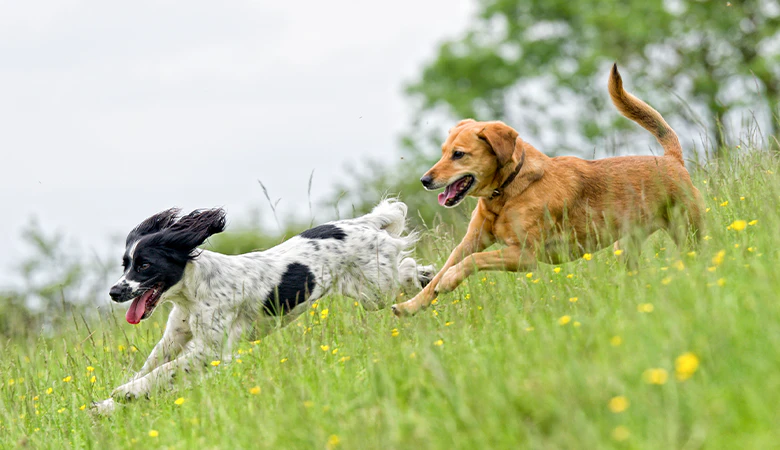
A solid coat consists of one colour across the entire body, as often seen in the Weimaraner and Golden Retriever. A bicolour coat features two clearly distinct colours, such as black and white. This pattern is commonly seen in the Border Collie and Cavalier King Charles Spaniel. Tricolour dogs have three different colours in their coat. A well-known combination is black, white and brown, often seen in the Beagle and Bernese Mountain Dog.
Brindle, merle and sable
A brindle coat has dark stripes over a lighter base colour, creating a tiger-like pattern, as seen in the Boxer and Boston Terrier. A merle coat has dark patches or streaks scattered over a lighter background of the same colour, creating a marbled effect. This pattern is found in breeds such as the Australian Shepherd and the Welsh Corgi. A sable coat is characterised by hairs with a light base and dark tips, creating a subtle colour gradient. This can be seen in the German Shepherd and Pomeranian.
Spotted, piebald and harlequin
Some dogs have a spotted or speckled coat. A spotted pattern features small or large coloured spots, as seen in the Dalmatian. A piebald pattern consists of a predominantly white coat with larger coloured patches. This pattern occurs, for example, in the Bull Terrier and the Collie. The harlequin pattern is characterised by a white base with irregular dark patches that stand out clearly against the rest of the coat. The Great Dane is one of the best-known dog breeds with a harlequin pattern.
Can a dog’s coat colour change?
Yes, in some dogs the coat colour can change over the course of their lives. This often happens naturally and is entirely the result of inherited traits. For example, Dalmatians are born completely white, with their characteristic spots appearing later. Another example is silver-grey Poodles, which can be born black before their coat gradually lightens. Puppies born with a dark brown coat may also gradually become beige.
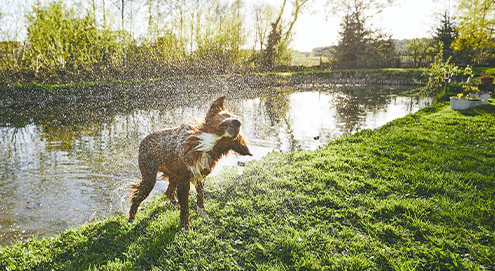
External factors can also cause a dog’s coat to appear different. Saliva and tears can cause reddish staining on the coats of white dogs, while black coats may fade to brown or red. During shedding, loose dead hairs can also give the coat a lighter or reddish-brown hue, making it appear to change colour temporarily. Prolonged exposure to sunlight can bleach the hair tips, giving especially dark coats a lighter appearance. These changes are usually temporary and do not necessarily indicate anything about your dog’s health.
Discover everything for your dog’s coat care
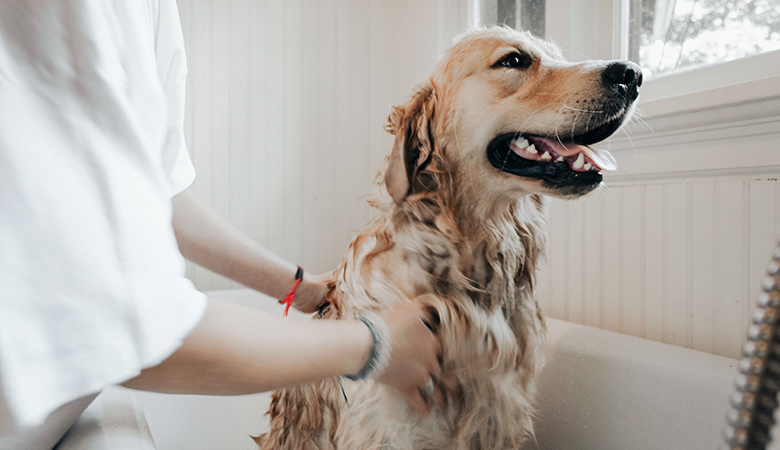
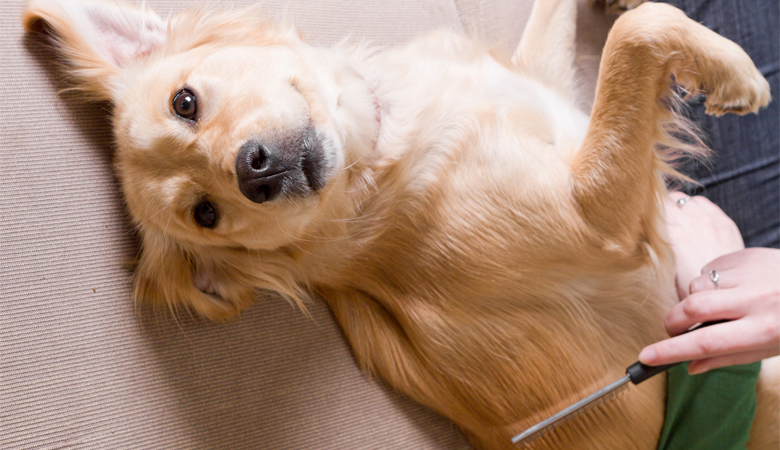
Whether your dog has a solid, spotted or brindle coat, every coat requires the right care. Regular brushing and the use of suitable grooming products help keep the coat healthy and preserve its natural colour and shine. Looking for products to care for your dog’s coat? At Vetsend, you’ll find a wide range of brushes, shampoos and other coat care products tailored to different coat types and needs.