How does dandruff develop?
One of the most common causes of dandruff is dry skin. Just like humans, a dog’s skin can become dry due to dry air, central heating, cold weather or excessive bathing. Using the wrong shampoo can also damage the skin’s natural protective barrier.
Sebum also plays an important role. The skin naturally produces sebum to remain supple and healthy. When sebum production becomes disrupted, flakes can develop. Some dogs develop dry skin as a result, while others develop oily skin with scaling.
Diet can also influence skin condition. Essential fatty acids such as omega-3 and omega-6 fatty acids are important for maintaining a healthy skin barrier. A deficiency or reduced absorption of these nutrients may contribute to dry, flaky skin.
Dandruff is more than just dry skin
Although dandruff is often harmless, it can sometimes indicate an underlying problem. Allergies, skin infections and parasites can also cause flaking.
In dogs with allergies, dandruff is often accompanied by itching, redness, ear problems or excessive licking of the paws. Parasites such as fleas or certain mites can also cause skin irritation and flaking. One well-known mite is the Cheyletiella mite, often referred to as “walking dandruff” because the flakes appear to move.
In addition, bacterial skin infections, yeast infections and certain hormonal disorders, such as thyroid problems, can contribute to dandruff.
Dandruff with or without itching
Not every dog with dandruff experiences itching. Some dogs only have white flakes in their coat and otherwise seem perfectly healthy. In these cases, dry skin is often the cause.
When a dog has dandruff and is also scratching, biting or rubbing excessively, an underlying condition is more likely. Itching combined with flaking may indicate an allergy, a skin infection or a parasite infestation.
Because itching further damages the skin, symptoms can reinforce one another. Damaged skin flakes more, causing additional irritation.
What can you do yourself for dandruff?
If the skin otherwise looks calm and healthy, there are several things you can do at home to support it.
Use a nourishing shampoo
A mild dog shampoo can help loosen flakes and hydrate the skin. Always choose a shampoo specifically developed for dogs. A dog’s skin has a different pH level from human skin. A suitable option is Maxani Honey Complex Shampoo.
Support the skin with a conditioner
After washing, a conditioner can help retain moisture and support the skin barrier. This is particularly useful for dogs with dry or sensitive skin.
Skin-supporting spot-ons
Various spot-on products are available that have been specially developed to care for the skin. They often contain ingredients such as essential fatty acids, ceramides or skin-repairing components that help support the natural skin barrier.
Pay attention to nutrition
Healthy skin starts from within. Supplements containing omega-3 fatty acids or skin-supporting oils can help improve skin and coat condition. Skin-supporting nutrition can also be a good option, such as Specific Skin Function Support COD.
Brush regularly
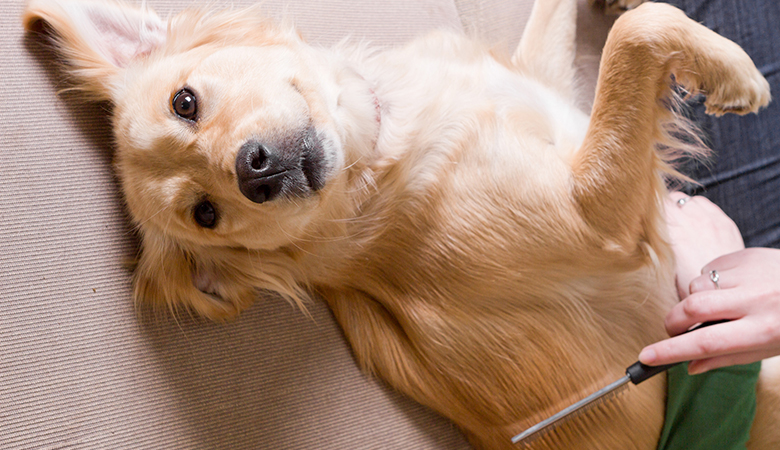
Regular brushing removes loose flakes and helps distribute natural skin oils more evenly across the skin and coat. It also allows you to spot abnormalities such as redness, wounds or parasites more quickly.
When should you visit the vet?
Although dandruff often has a relatively harmless cause, it is advisable to consult a veterinarian if:
- the symptoms appear suddenly
- the flaking increases
- there is significant itching
- bald patches develop
- the skin becomes red or inflamed
- your dog behaves differently or appears unwell
Your veterinarian can investigate whether an allergy, infection, parasite or another underlying condition is responsible.
Do you have any questions about dandruff in dogs? Please contact us at veterinarian@vetsend.co.uk.
Frequently Asked Questions About Dandruff in Dogs
My dog has dandruff. What can I do?
First check whether the skin otherwise looks healthy and calm. A nourishing shampoo, conditioner, skin-supporting spot-on or omega-3 supplement may help. If the symptoms persist, contact your veterinarian.
My dog has white dandruff in its coat. Is that serious?
Not always. White flakes are often caused by dry skin. If itching, redness or hair loss are also present, there may be an underlying issue.
Why does my dog have dandruff?
Dandruff can be caused by dry skin, disrupted sebum production, allergies, parasites, skin infections or sometimes an underlying condition such as a thyroid disorder.
My dog has dandruff without itching. Should I be worried?
Dandruff without itching is often caused by dry skin. It is usually less concerning than dandruff combined with itching, but it is still wise to monitor the skin closely.
My dog has dandruff and itching. What does that mean?
Dandruff combined with itching may indicate an allergy, parasites or a skin infection. In that case, a visit to the veterinarian is recommended.