How does tartar develop?
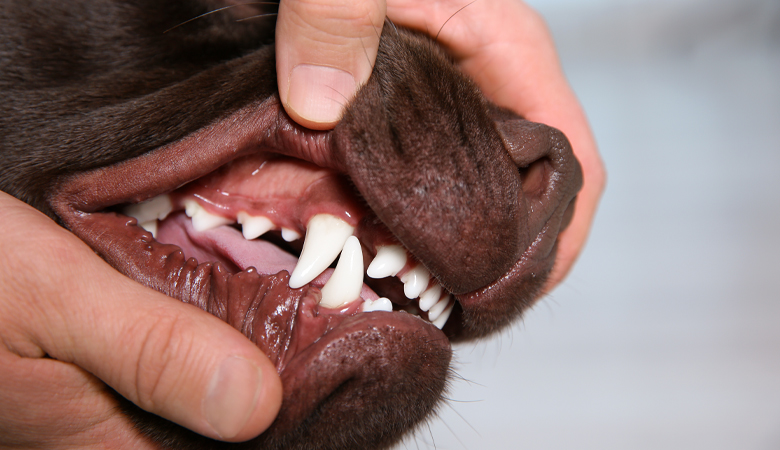
If plaque is not brushed away daily, it hardens under the influence of minerals in the saliva. This hard, yellow-brown layer is called tartar.
Tartar adheres firmly to the tooth, has a rough surface and attracts even more plaque. It can no longer be removed with a toothbrush. Once tartar is present, the gums may recede and pockets can form where bacteria accumulate. This can eventually lead to periodontitis, a serious inflammation of the tissues supporting the teeth.
Can you remove tartar yourself?
Once plaque has hardened into tartar, you cannot safely remove it at home. It must be professionally removed by a veterinarian, usually during a dental cleaning under anaesthetic. That is why prevention is so important.
What can you do to prevent tartar in your dog?
There are several things you can do yourself to help prevent tartar:
1. Brushing your dog’s teeth
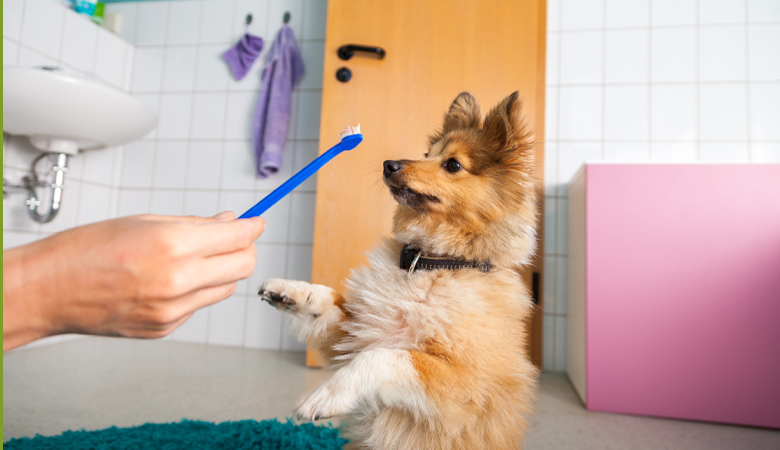
Daily brushing is the most effective way to remove plaque before it turns into tartar. Always use a special dog toothpaste and never human toothpaste.
2. Good basic knowledge of your dog’s teeth
By understanding how your dog’s teeth are structured, you can better recognise where problems may arise.
Read more in our blog: What you need to know about your dog’s teeth.
3. Additional dental care
In addition to brushing, you can care for your dog’s teeth with:
- Special dental chews
- Dental care snacks
- Mouthwashes, powders or gels
- Toys with a cleaning effect
View the full range of dental care products here. Our blog about dental care for pets also provides practical tips.
4. Dental diet
There is special dental food that helps to mechanically reduce plaque.
What does a dental diet do:
- Provides a cleaning effect while chewing.
- Helps reduce plaque formation thanks to its composition.
- Often contains antibacterial ingredients and substances with antioxidant properties to support better oral resistance.
5. Regular check-ups
Have your dog’s teeth checked regularly by your veterinarian. Some dog breeds, especially small breeds, are more prone to tartar.
February is the Pet Dental Care Month every year. A good time to have your dog’s teeth checked.
How can you recognise dental problems in your dog?
Dogs with dental problems often show the following symptoms:
- Bad breath
- Yellow-brown deposits on the teeth
- Red or bleeding gums
- Difficulty eating
- Drooling
- Pain when the mouth is touched
Do you notice these symptoms in your dog? Then visit your veterinarian for a dental check.
Why is dental care so important?
Dental problems are not just a local issue in the mouth. Bacteria from inflamed gums can enter the bloodstream and affect other organs such as the heart, liver and kidneys. Healthy teeth therefore contribute to your dog’s overall health. By starting dental care early, you can prevent pain, expensive treatments and health problems later in life.
Do you have questions about tartar in dogs? Please contact us via veterinarian@vetsend.co.uk.