Service
Basket
Menu
Up to 50% off during Purina Week! Read more

Python

The Python (Pythonidae) is a family of non-venomous constrictor snakes found in tropical and subtropical regions of Africa, Asia and Australia. This family includes various species, such as the Ball Python, Reticulated Python and Carpet Python. Depending on the species, pythons inhabit a wide range of environments, including forests, grasslands, wetlands and rocky areas. Many pythons are primarily active at dusk or during the night and spend much of their time hidden away. They hunt as ambush predators and kill their prey by constriction. Their temperament, size and behaviour vary considerably between species and individuals. Some species remain relatively small, while others can grow extremely large and powerful. As a result, not all species are suitable for inexperienced keepers. In captivity, it is important to replicate the natural habitat of the chosen python species as closely as possible, with sufficient space, hiding places, suitable temperature zones, appropriate humidity levels and a secure enclosure. This helps meet the animal’s basic needs and supports good condition and overall wellbeing.

Python

Characteristics

Country of origin: Africa, Asia and Australia
Also known as: Pythonidae
Body build: A muscular and elongated body with a broad head and powerful jaws. Some species possess heat-sensing organs around the mouth.
Weight: > 500 g to 90 kg
Life Expectancy: 20 - 30 years
Health risks: Shedding problems, respiratory infections, parasites, burns caused by incorrect heating, and health issues resulting from improper temperature, humidity or nutrition.
Food type: Carnivorous. Pythons feed on prey animals such as rodents and birds.
Activity period: Primarily active at dusk and during the night, depending on the species and habitat.
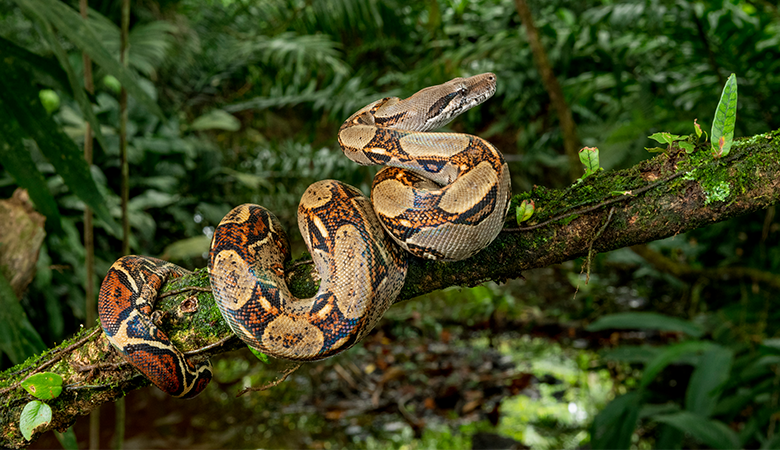
Color: Many pythons have a spotted, banded or marbled pattern in shades of brown, black, yellow or green that helps with camouflage. Their skin consists of smooth or slightly glossy scales.

Profile

Activity
Tameness
Ease of care
Space requirements
Environmental sensitivity
Nutritional needs

Popular products for the Python

Origin

Pythons naturally occur in parts of Africa, Asia and Australia. Depending on the species, they inhabit tropical rainforests, grasslands, wetlands, savannahs and rocky areas. Many pythons are adapted to warm and humid climates and spend much of their time on the ground, among vegetation or in shelters such as burrows and rock crevices. Some species are skilled climbers or swimmers and make use of different parts of their habitat. During warmer periods, pythons are often more active, while at lower temperatures they retreat to sheltered locations. Due to their distribution across a wide range of habitats, pythons have adapted to various climatic conditions.

Appearance and behaviour

The appearance of pythons varies between species, but they generally have a muscular, elongated body with a broad head and powerful jaws. Their colours and patterns differ considerably and often consist of spotted, banded or marbled markings that provide effective camouflage. Many species display shades of brown, black, yellow or green that blend into their natural surroundings. Pythons are primarily active at dusk and during the night, spending much of their time hidden away. They hunt as ambush predators (waiting in concealment until prey comes close before striking) and seize and constrict their prey using their muscular bodies. Behaviour varies between species and individuals. Some species are relatively calm, while others may be more defensive or active. Like other reptiles, pythons shed their skin regularly. Appropriate humidity levels and a suitable enclosure setup support trouble-free shedding and contribute to the animal’s wellbeing.

All About the Python

Which python species are there?

The Python family consists of several species found in Africa, Asia and Australia. Within this family, there are clear differences in size, habitat, behaviour and appearance. Below are some well-known species that are commonly kept in captivity:

  • Ball Python
  • Reticulated Python
  • Carpet Python
  • Burmese Python
  • Green Tree Python
  • Woma Python
  • Black-headed Python
  • Children’s Python

How fast is a Python?

A python’s speed varies depending on the species, size and situation. In general, pythons are not fast pursuit hunters, but they can strike surprisingly quickly when prey comes within range. Especially when hunting or when startled, they are capable of making rapid movements in a very short time. Most pythons move in a calm and controlled manner. Some species are skilled climbers or swimmers and make use of different parts of their habitat. Although larger species may appear slower because of their size, they still possess considerable strength and control over their movements.

Is a Python dangerous?

Pythons are non-venomous snakes, but their size, strength and behaviour can still present risks. Larger species in particular possess significant muscle power and may defend themselves if they feel threatened or are handled incorrectly. A bite from a python can be painful, and larger species can be dangerous to people or other animals.

How dangerous a python is depends on the species, its size and how it is handled. Some pythons are relatively calm, while others may be more defensive or sensitive to stress. Proper handling, suitable housing and knowledge of the species’ behaviour are important for reducing risks. For beginners, smaller and calmer species, such as the Ball Python, are often more suitable than large python species.

What does a Python eat?

Pythons are carnivores that primarily hunt small to medium-sized mammals and birds in the wild. The type of prey they consume varies depending on the species and the size of the snake. Pythons hunt as ambush predators and kill their prey through constriction before swallowing it whole.

In captivity, pythons are usually fed frozen prey animals such as mice or rats that are offered after thawing. This reduces the risk of injuries that live prey can cause. The type of prey that is suitable and how often feeding should take place depends on the species, age and size of the snake. It is important to offer prey of an appropriate size and avoid overfeeding. In addition, always ensure that fresh drinking water is available. Ideally, this should be provided in a large bowl so that the snake can also soak in it if desired.

How long can a Python grow?

The length of a python varies greatly between species. Smaller python species often remain between 60 and 150 cm in length, while larger species can grow several metres long. Some large pythons, such as the Reticulated Python and Burmese Python, can exceed 5 metres in length. The eventual size of a python depends on the species, sex, genetics and level of care. In many species, females grow larger and heavier than males. Due to the considerable variation in size, it is important to research in advance how much space a particular python species requires.

Can you keep a Python as a pet?

Certain python species are commonly kept as pets, but not every species is suitable for beginner keepers. Large python species in particular require a great deal of space, knowledge and experience. It is therefore important to research carefully in advance which species is best suited to your level of experience and living situation. Pythons require a terrarium with suitable temperature zones, appropriate humidity, sufficient hiding places and a secure setup. In addition, consideration should be given to the size the snake may eventually reach and the long life expectancy of many species. For beginner keepers, smaller and calmer species, such as the Ball Python, are often recommended. Always check the current laws and regulations regarding reptile keeping before purchasing a python.

Care and Housing of the Python

Caring for a Python requires a safe and carefully planned enclosure that reflects the snake’s natural way of life. Depending on the species, pythons live on the ground, among vegetation or partly in trees. They also require sufficient hiding places and room to move around. The enclosure should be large enough to create different climate zones and allow natural behaviour. A well-designed terrarium contributes to calmness, activity and the snake’s overall wellbeing. Always provide a clearly defined warm zone and a cooler zone, allowing the Python to choose a suitable location.

Temperature and Lighting

Pythons are cold-blooded and depend on their environment to regulate their body temperature. The enclosure should contain different temperature zones, including a clearly defined basking spot where the snake can warm itself. Temperatures should remain stable and be carefully monitored. Lighting is generally used to support a natural day and night cycle. For many python species, UVB lighting is not essential, but an appropriate lighting schedule and reliable heat source remain important. Always use a reliable thermostat to safely regulate heat sources.

Enclosure Setup

The enclosure setup should match the lifestyle of the chosen python species. Hiding places, sturdy branches for climbing species and sufficient space are important for the snake’s wellbeing. Choose materials that are safe and easy to clean. In addition, suitable bedding is required to help maintain the correct humidity level, such as coconut fibre, reptile bark or specialist terrarium substrate. A large water dish with fresh drinking water should always be available. Many python species also use the water dish for soaking or during shedding.

Care

Pythons shed their skin regularly. Appropriate humidity levels help support trouble-free shedding. Check that the skin has been shed completely, especially around the eyes and the tip of the tail. Daily removal of faeces, refreshing drinking water and keeping the enclosure clean are also important for good hygiene. By regularly monitoring behaviour, appetite and body condition, you can identify changes early and support the health of your Python.

Reptiles and the vet

Reptiles and the vet: where can you go with your snake, turtle or lizard?

Reptiles and amphibians are unique pets that need completely different care from dogs or cats. They have specific requirements for their environment, diet and health, and the same applies when medical care is needed. But what should you do if your bearded dragon suddenly stops eating, or if your turtle has a small wound? Can you simply go to the vet? In this blog, you’ll read why it is important to find a vet with knowledge of reptiles and amphibians, and how insurance works for these exotic pets.
Snake sitting on a branch

How to set up a terrarium for reptiles? A complete guide

A well-designed terrarium is the foundation for a healthy and active reptile. Reptiles are completely dependent on their environment: temperature, humidity, lighting, diet and layout must closely match their natural habitat. In this blog, we guide you step by step through setting up a terrarium, from the initial choices to the finer details of plants, lighting and climate.

reptile

Types of reptiles: which reptiles are there?

Reptiles are fascinating animals that have been roaming our planet for millions of years. They belong to the group of cold-blooded vertebrates, have scaly skin, usually lay eggs, and depend on their environment to regulate their body temperature. Reptiles are popular as pets, but they are also incredibly diverse in the wild. In this blog, you will learn which types of reptiles exist and what their main characteristics are.

More tips